Travels to England
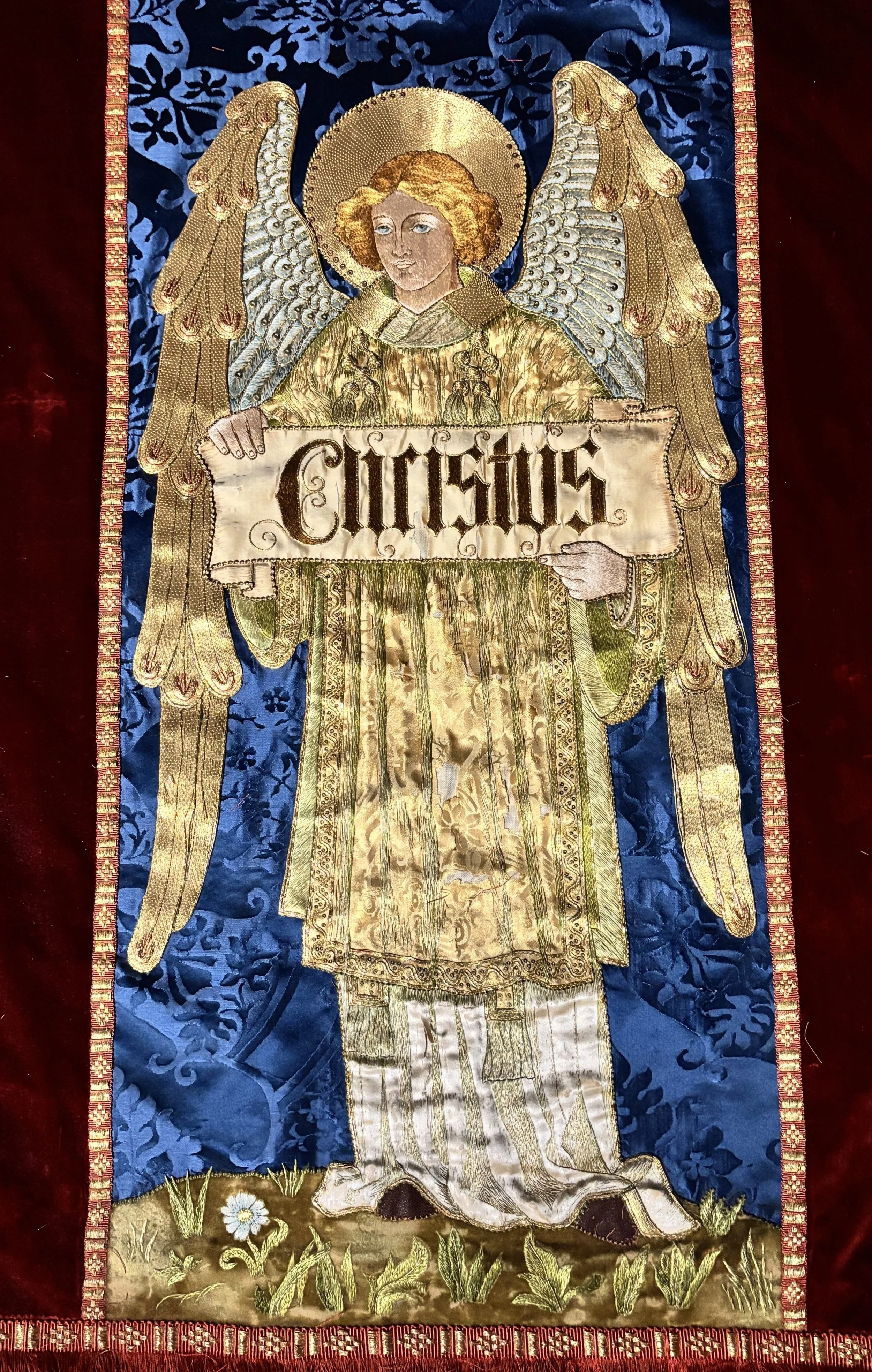
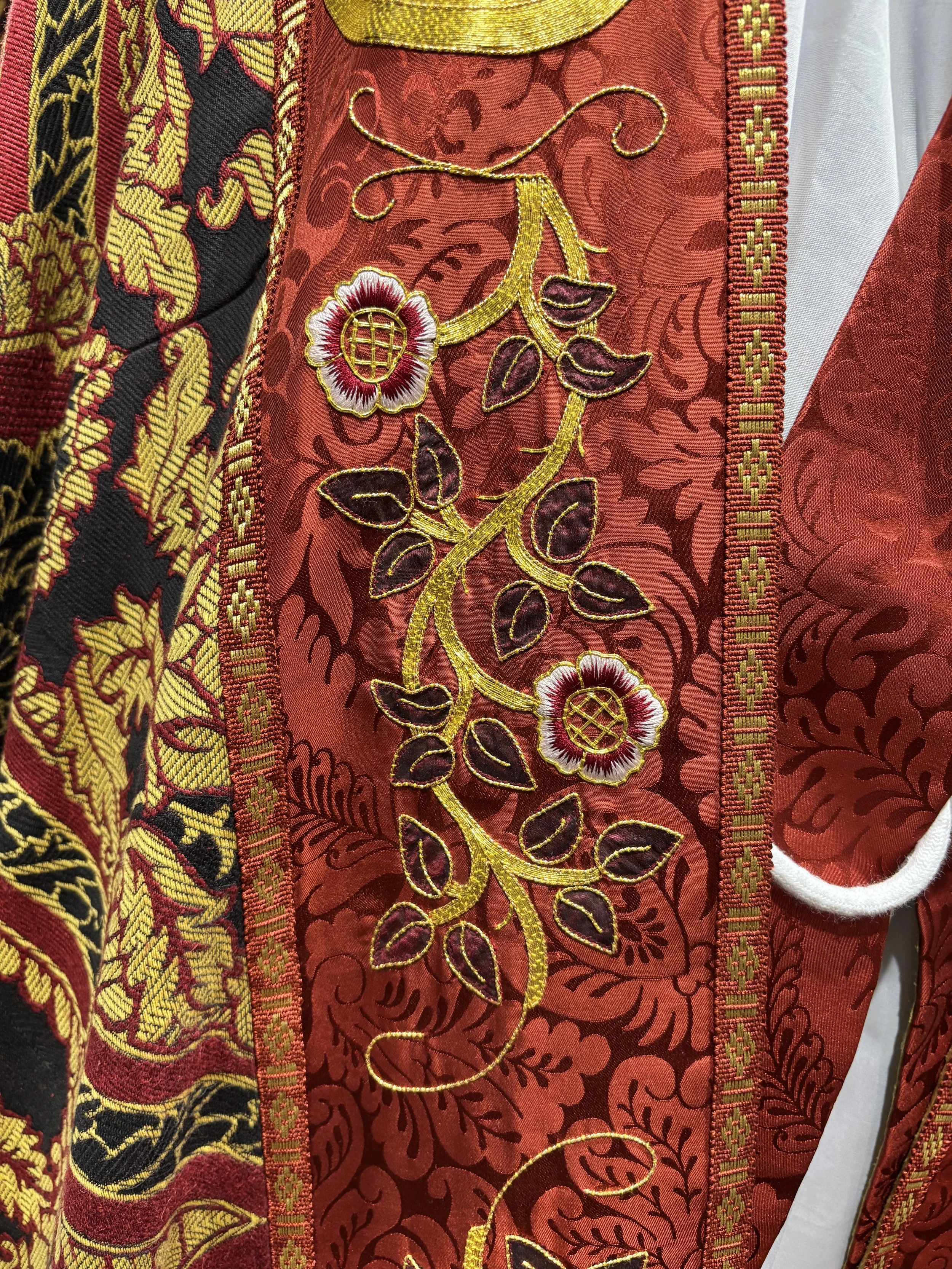
Silk and metallic gold embroidered chapel altar frontal panel
Exploring an ecclesiastical textile collection
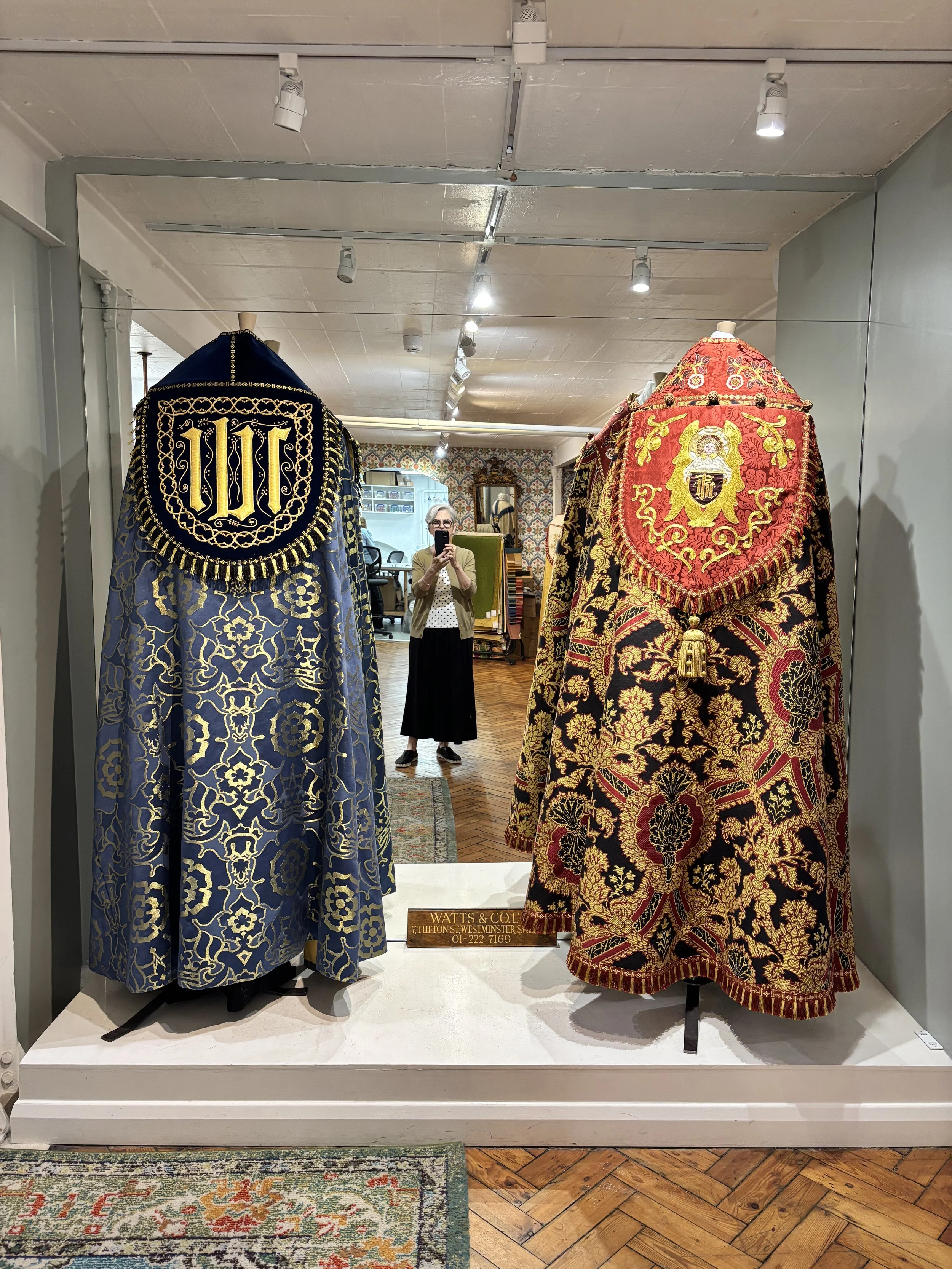
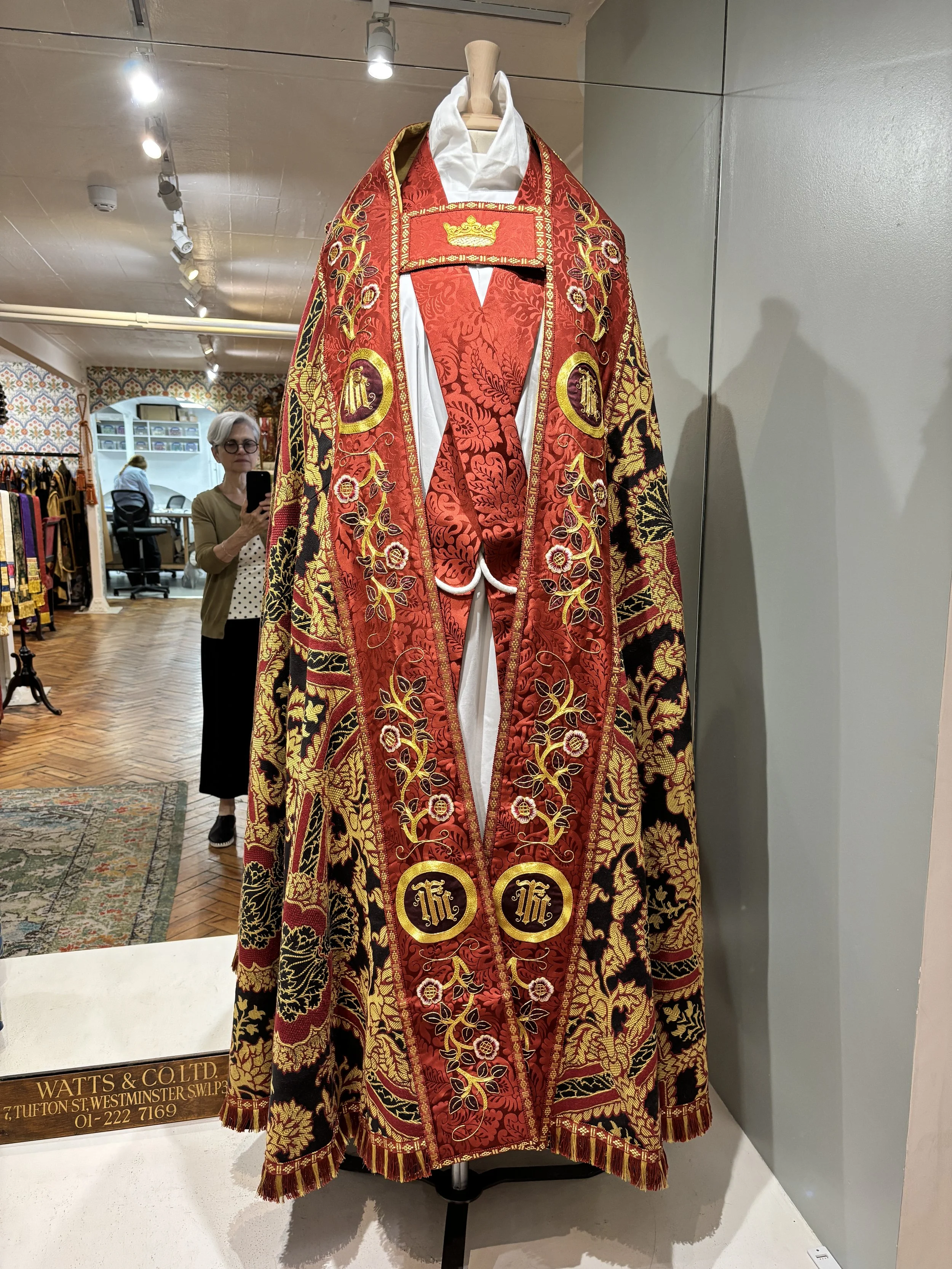
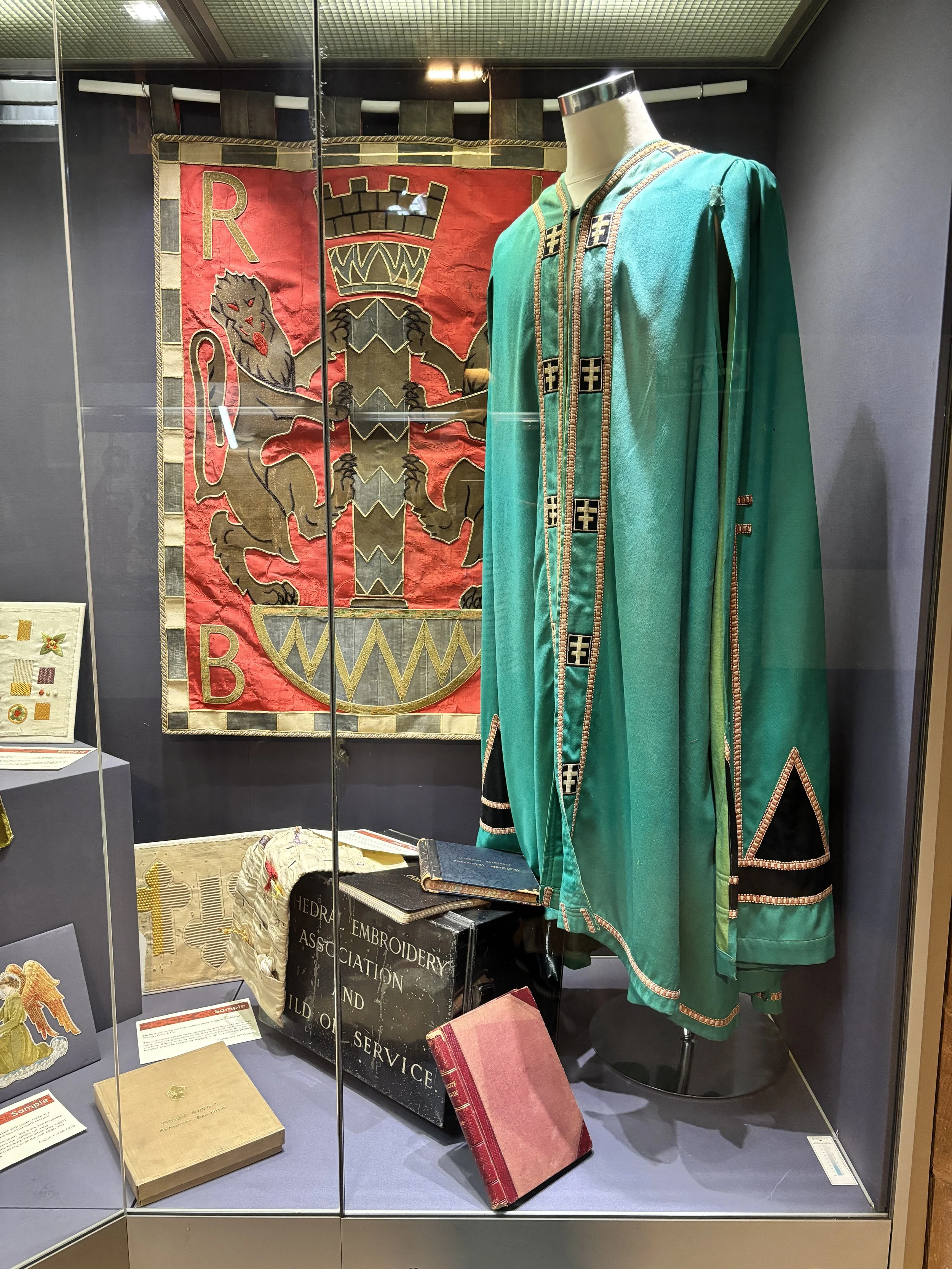
This summer I had the opportunity to travel to England to visit family, friends and see many fine examples of ecclesiastical embroidery. One of the highlights of my trip was to visit the Elizabeth Hoare Gallery at Liverpool Anglican Cathedral. Elizabeth Hoare was Director of bespoke vestment retailer Watts and Co. from 1951-2001 and is credited with amassing one of the finest collection of Victorian and Edwardian ecclesiastical embroidery in the UK. The heart of the collection are the embroideries made by the Liverpool Embroidery Association. This group of women was formed by Miss Rosalie Ellen Stolterfoht, Lady Derby, Mrs. Chavasse and Mrs. Ireland Blackburn in the early 20th century to create embroideries for the new Cathedral. The Gallery holds other fine examples of work created by guilds, professional firms and religious communities.
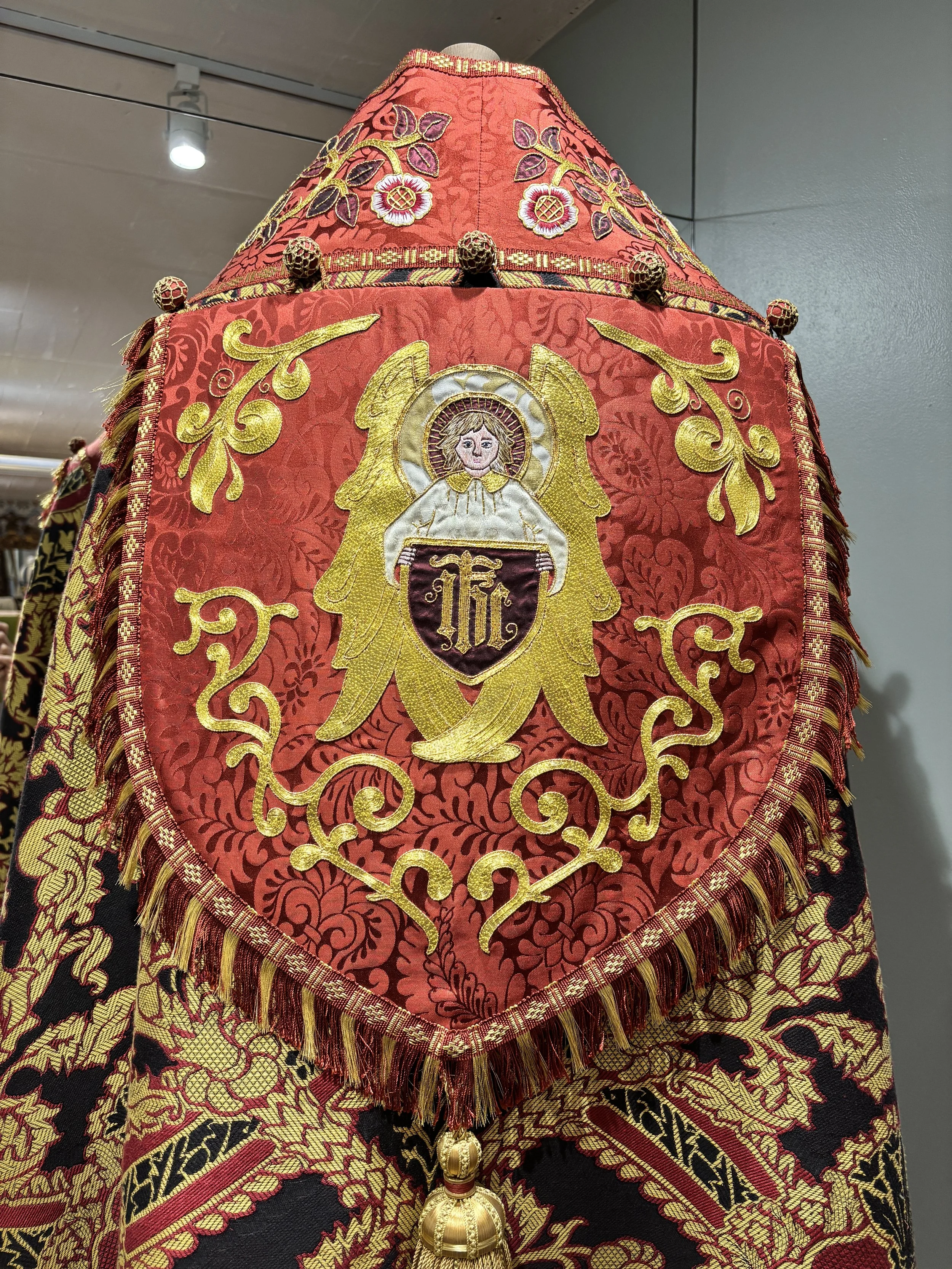
The above Angel panel is from an Advent frontal made for the Lady Chapel at Liverpool Cathedral. The work was carried out by sisters, Margaret and Maria Comber of the Cathedral’s Embroidery Association between 1906 and 1909. Maria embroidered the body of the angel while Margaret embroidered the face. The pattern was designed by George Frederick Bodley. Both women were considered the most skilled and prolific embroiderers of the Association.
Many thanks to Victoria Williams, Beverley Monk, Marion Landor and Celina Durant for welcoming me to the Gallery and sharing their expertise. These women are keeping the art of ecclesiastical embroidery alive by preserving these historic pieces and also taking on new commissions. Viewing the gallery must be arranged by appointment.
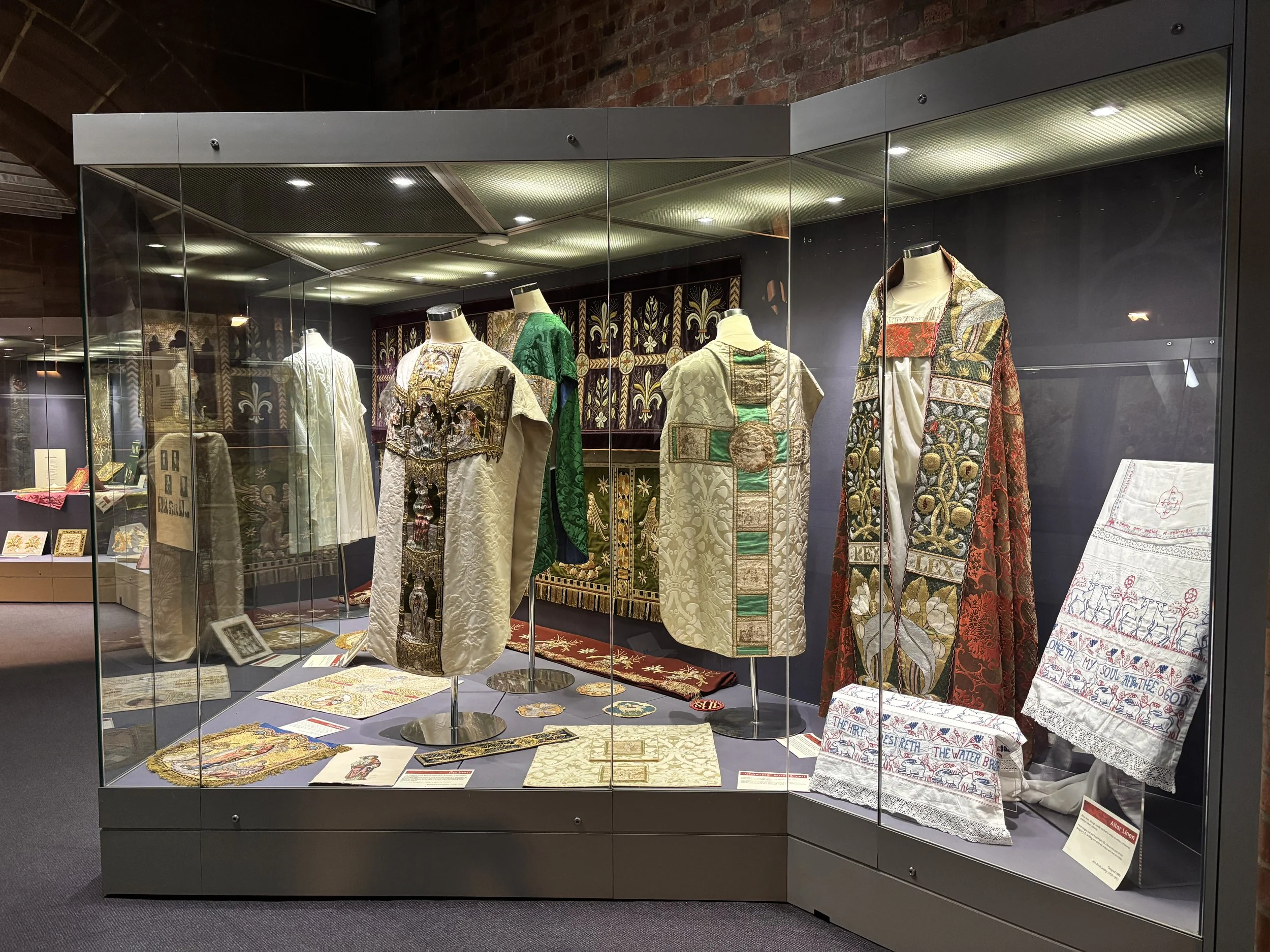
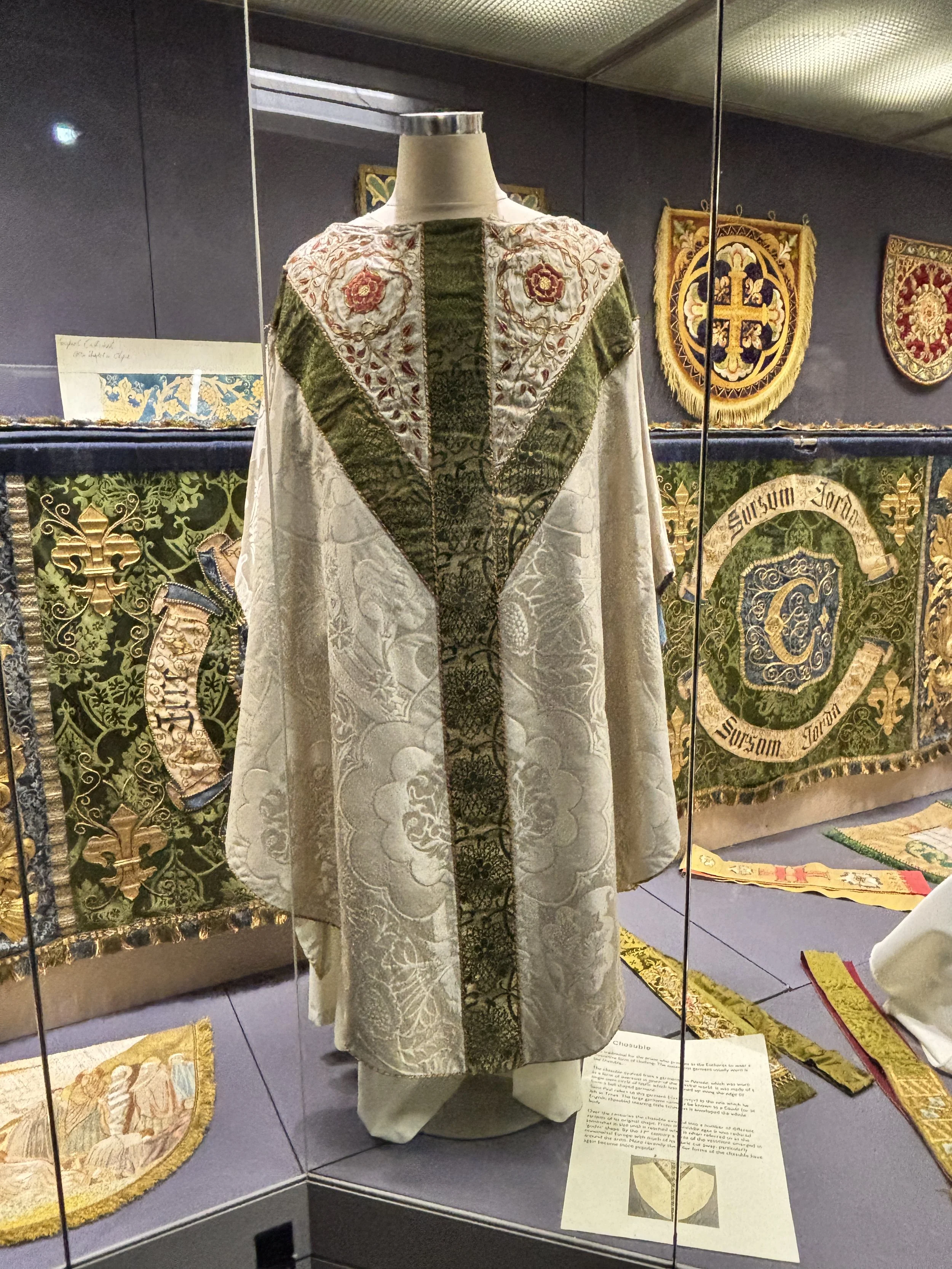
Display cases filled with an incredible variety of 19th century English ecclesiastical embroidery.
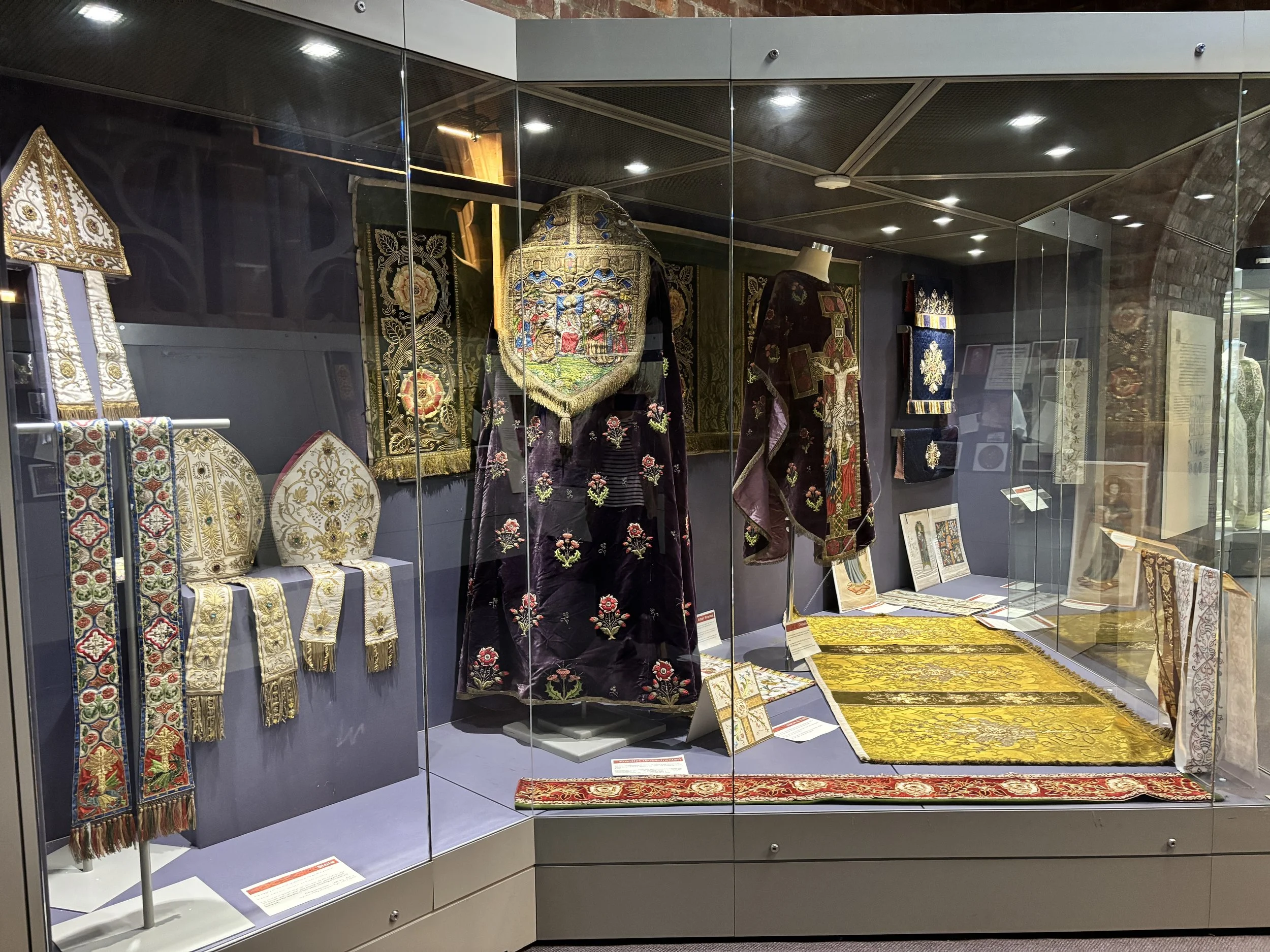
The cope and chasuble in the center of the case in the above photo were rescued from the trash.
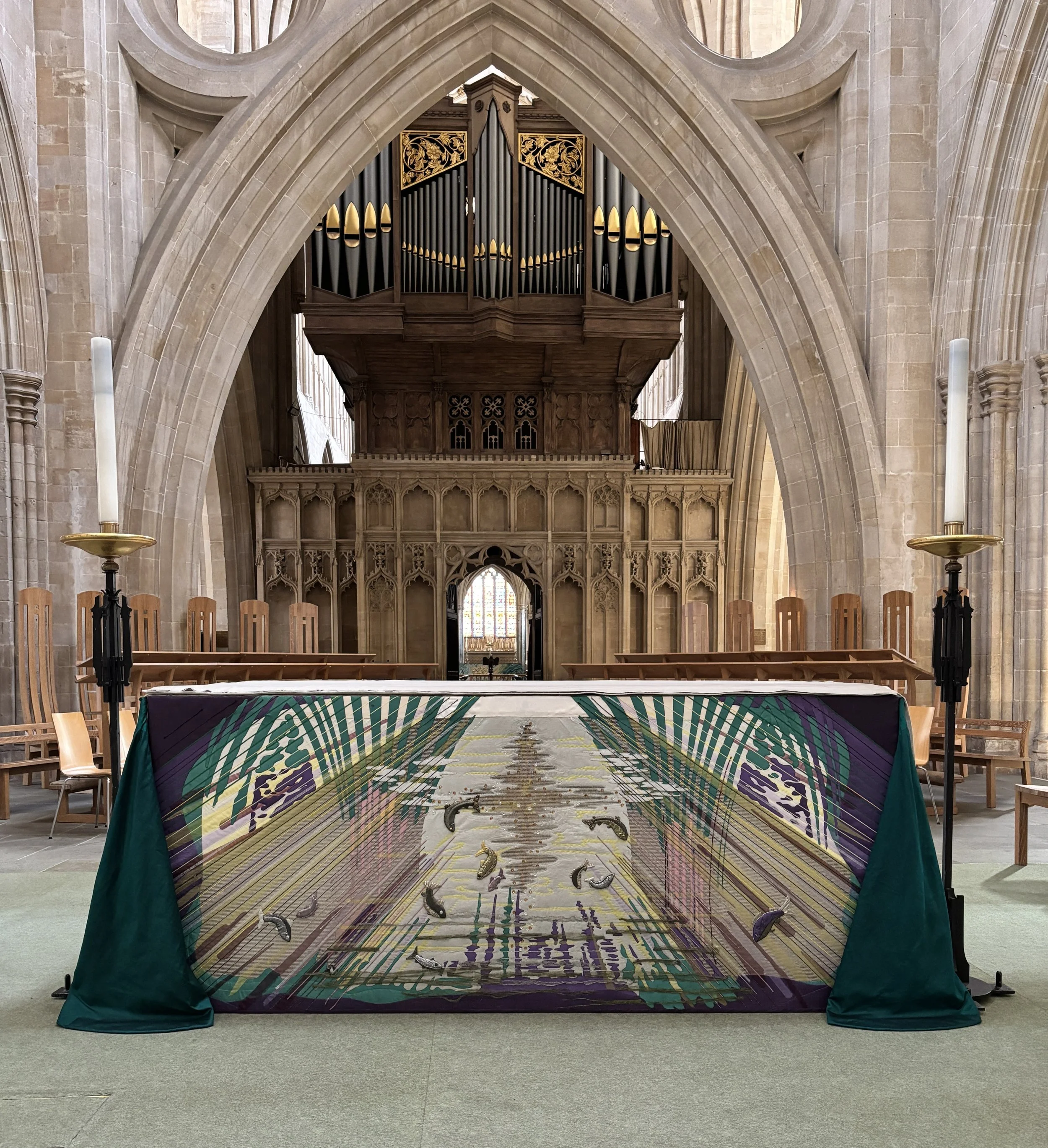
The nave altar at Wells Cathedral with one of the Millennium Series frontals
Wells Cathedral, Somerset
Wells Cathedral has many vestments and frontals designed by Jane Lemon and worked by the Royal School of Needlework Studio in 1999 – 2001. Jane Lemon is well-known as a teacher, ecclesiastical embroiderer and designer. She also designed five copes and an additional five altar frontals for the Cathedral. All of the designs incorporate the distinctive Gothic architecture of the Cathedral
The nave altar at Wells Cathedral with one of the Millennium series frontals designed by Jane Lemon and worked by the Royal School of Needlework Studio in 1999 – 2001. Jane Lemon is well-known as a teacher, ecclesiastical embroiderer and designer. She also designed five copes and an additional five altar frontals for the Cathedral. All of the designs incorporate the distinctive Gothic architecture of the Cathedral as well as the town’s natural spring and in this frontal Christ’s gift of “Living Water.” Note that a little penguin has also been incorporated into the design.
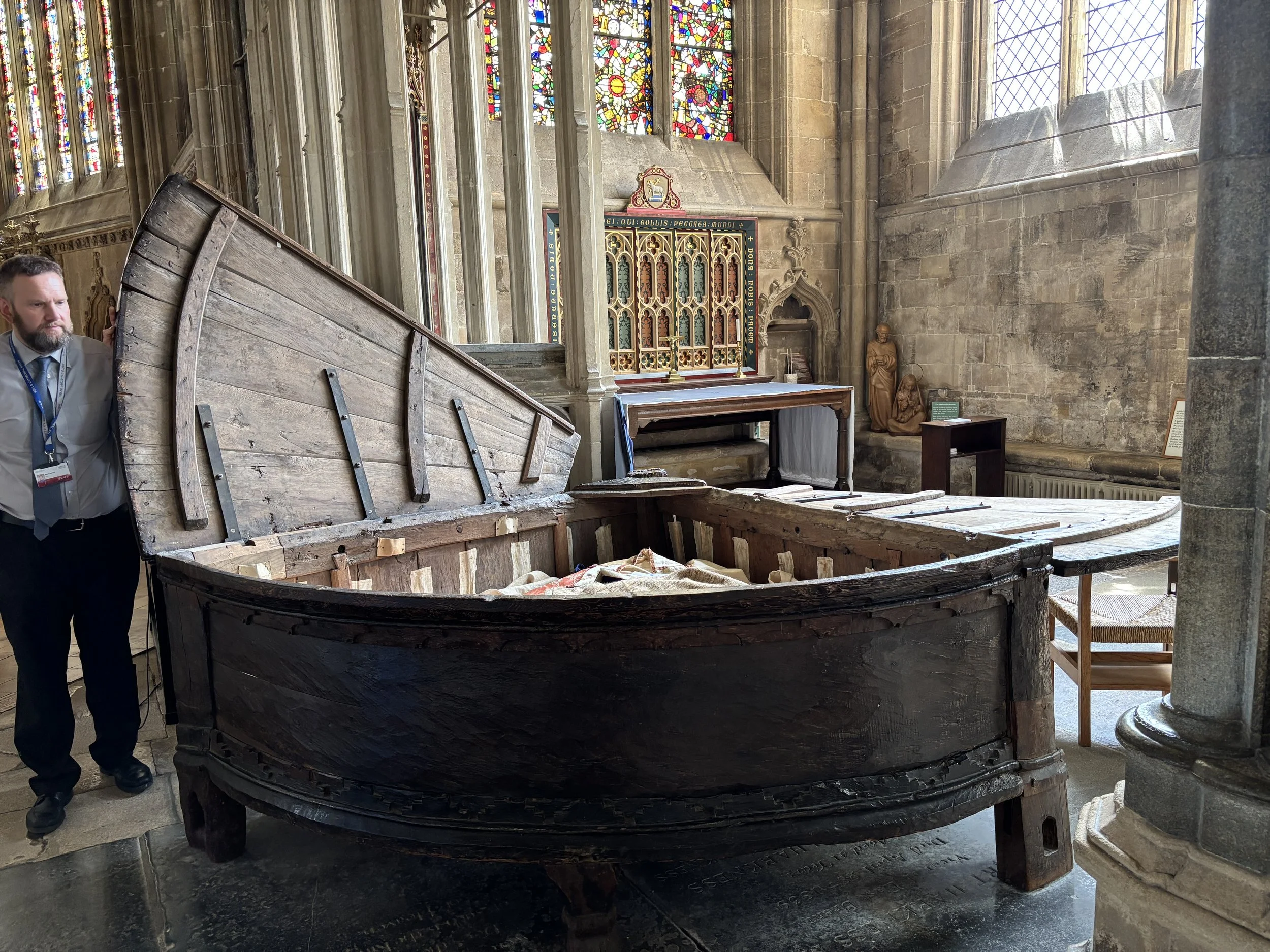
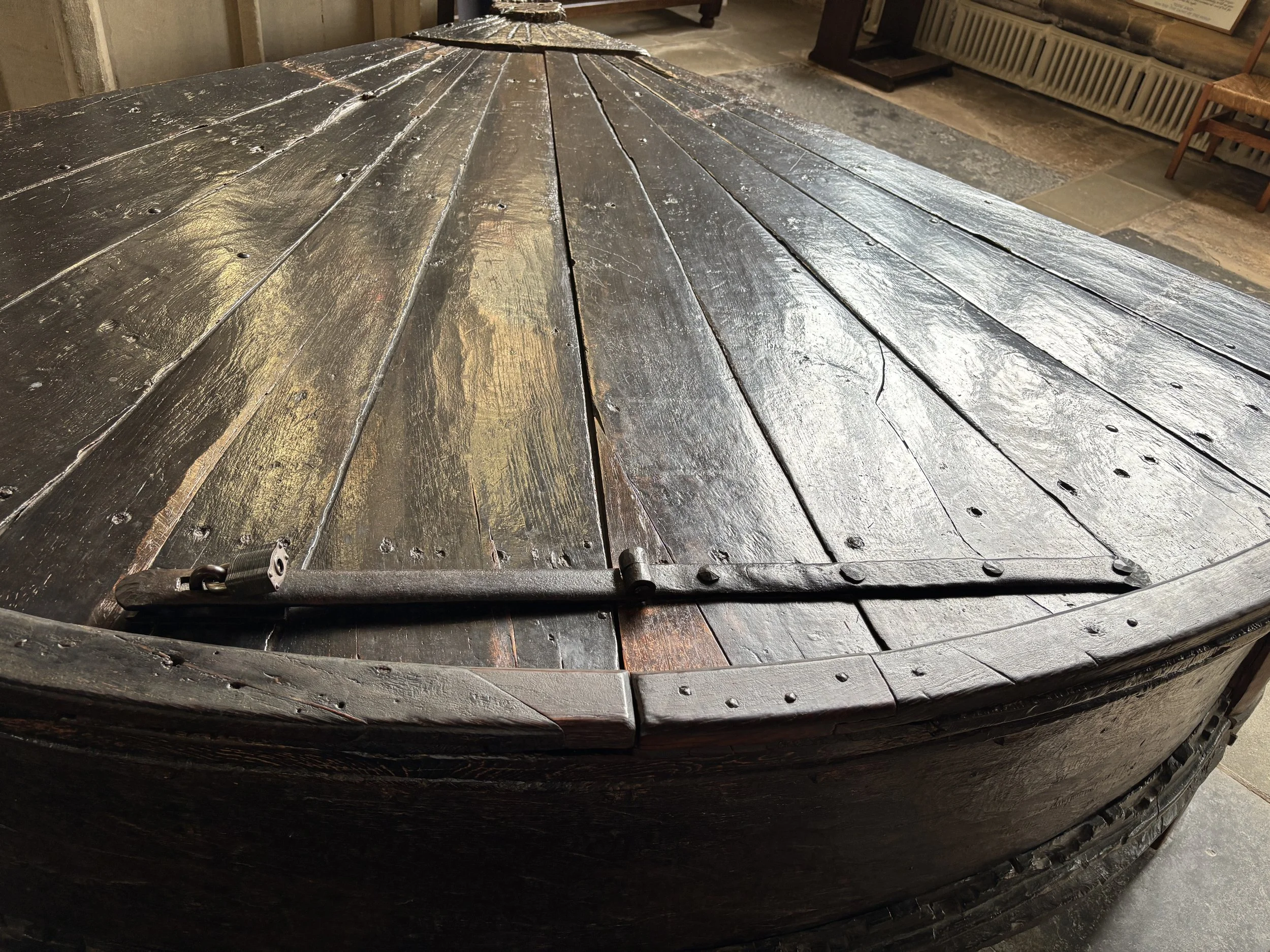
Also in Wells Cathedral is an ancient 12th century oak cope chest located near the St. John Baptist Chapel inside Wells Cathedral, UK. This chest most likely was originally used in the Saxon church located on the site of the current Cathedral. Dendrochronology (tree ring growth dating) has indicated that the oak tree used to make it was felled around 1109 and it was constructed around 1120. It may be one of the oldest pieces of furniture in England. Over 900 years later, it is still used to hold copes.
I would like to especially thank my dear friend the Rev’d Valerie Bonham for arranging access to the sacristy and other non-public spaces. Thanks also to David Lawlor, Senior Virger at Wells Cathedral for kindly agreeing to carefully open up the chest to show this American visitor what was inside and also for sharing so many vestment treasures of the Cathedral.
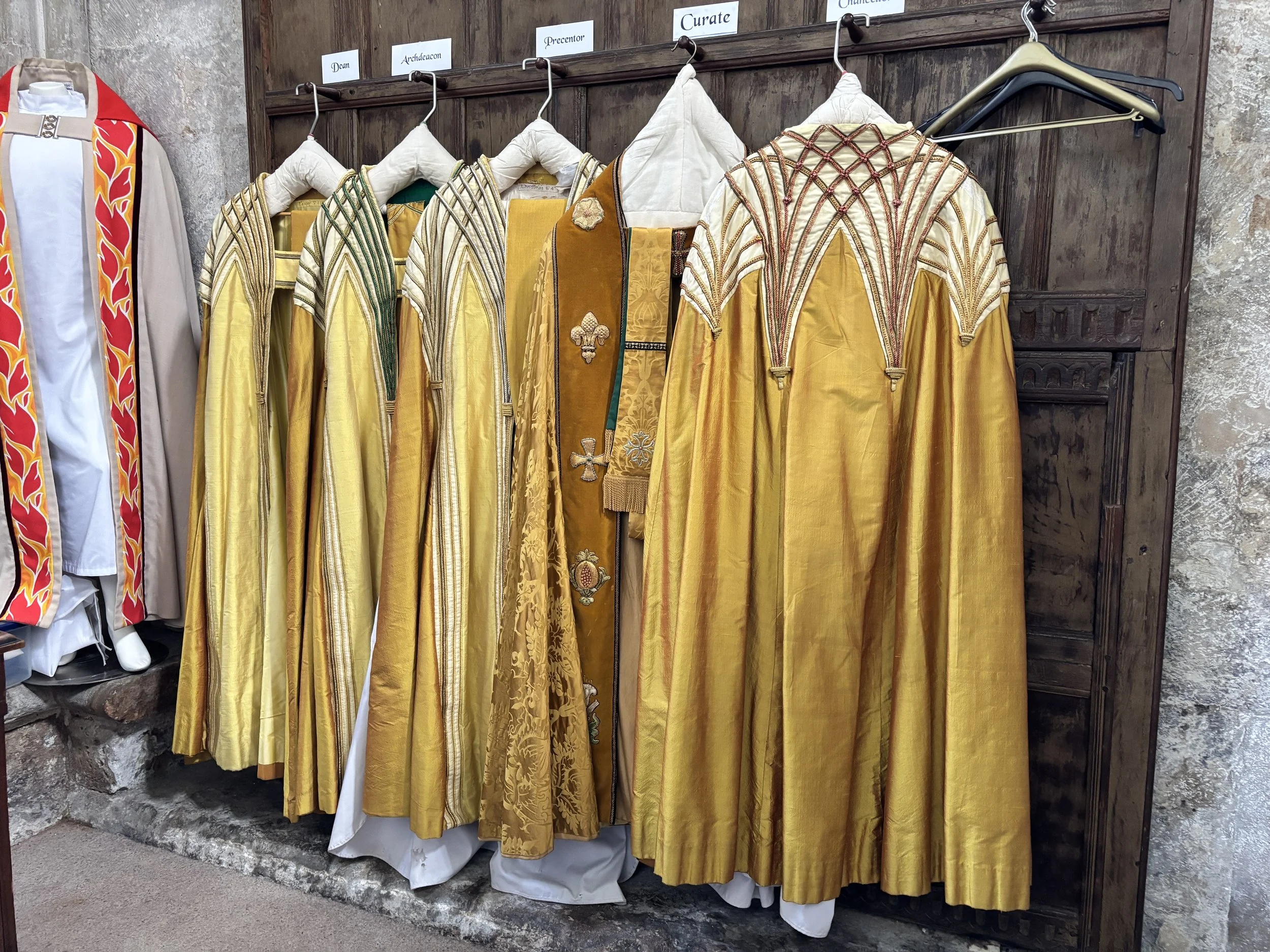
Copes designed by Jane Lemon and worked by the Royal School of Needlework Studio in 1999 – 2001.
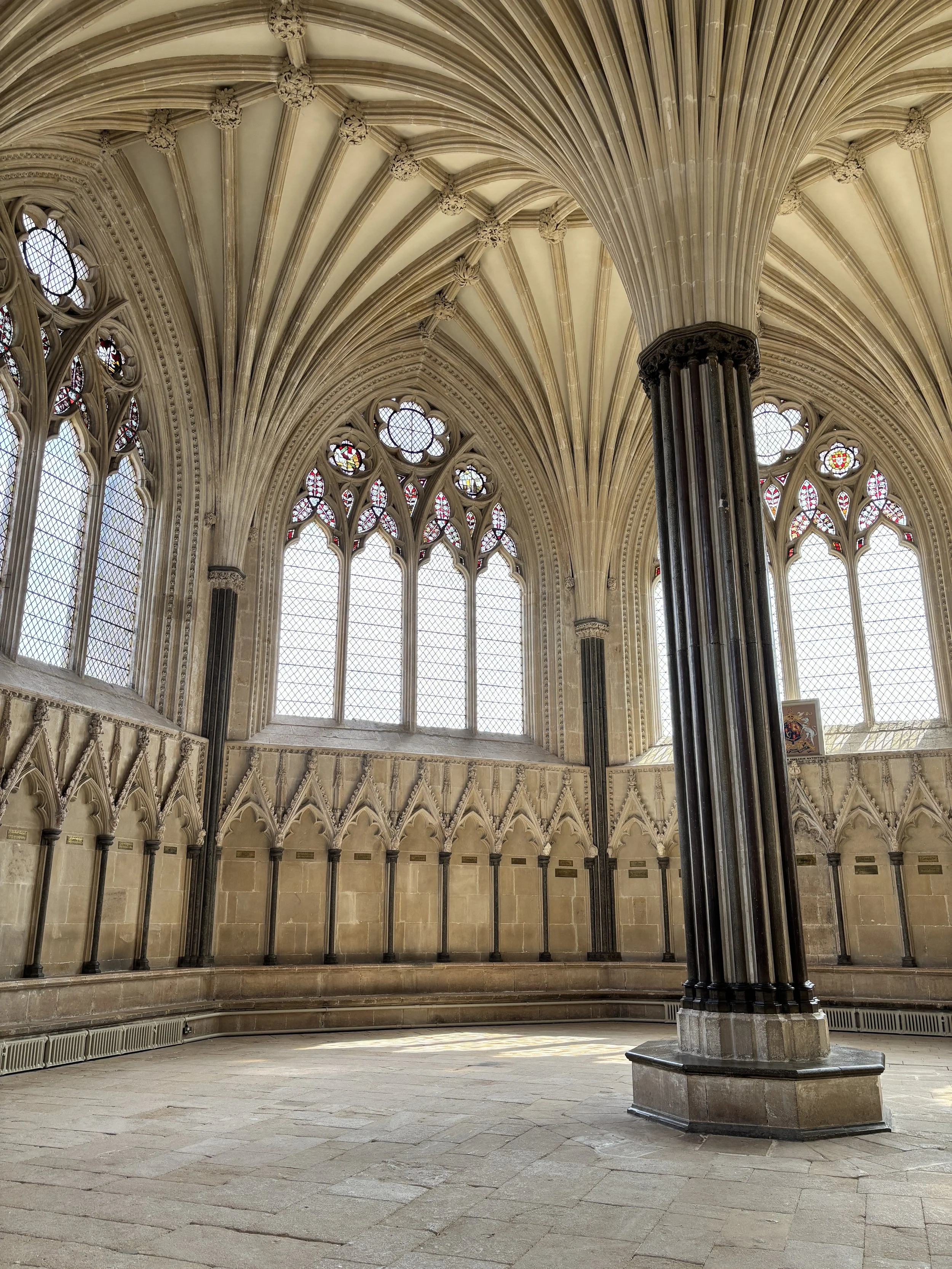
The Chapter House at Wells Cathedral with its fine ribbed-vaulted ceiling
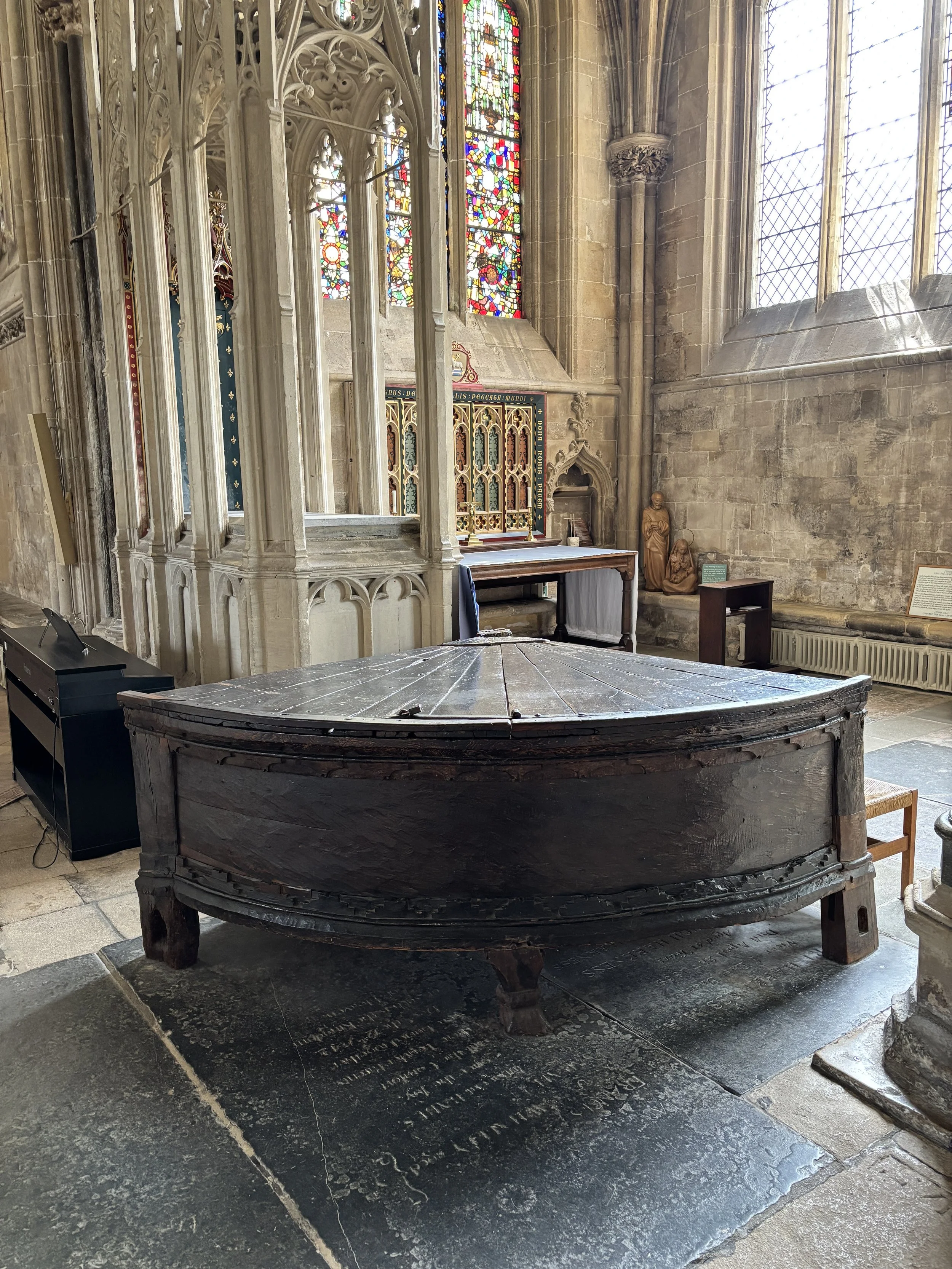
The 12th century oak cope chest located is still used to store some of the Cathedral’s copes
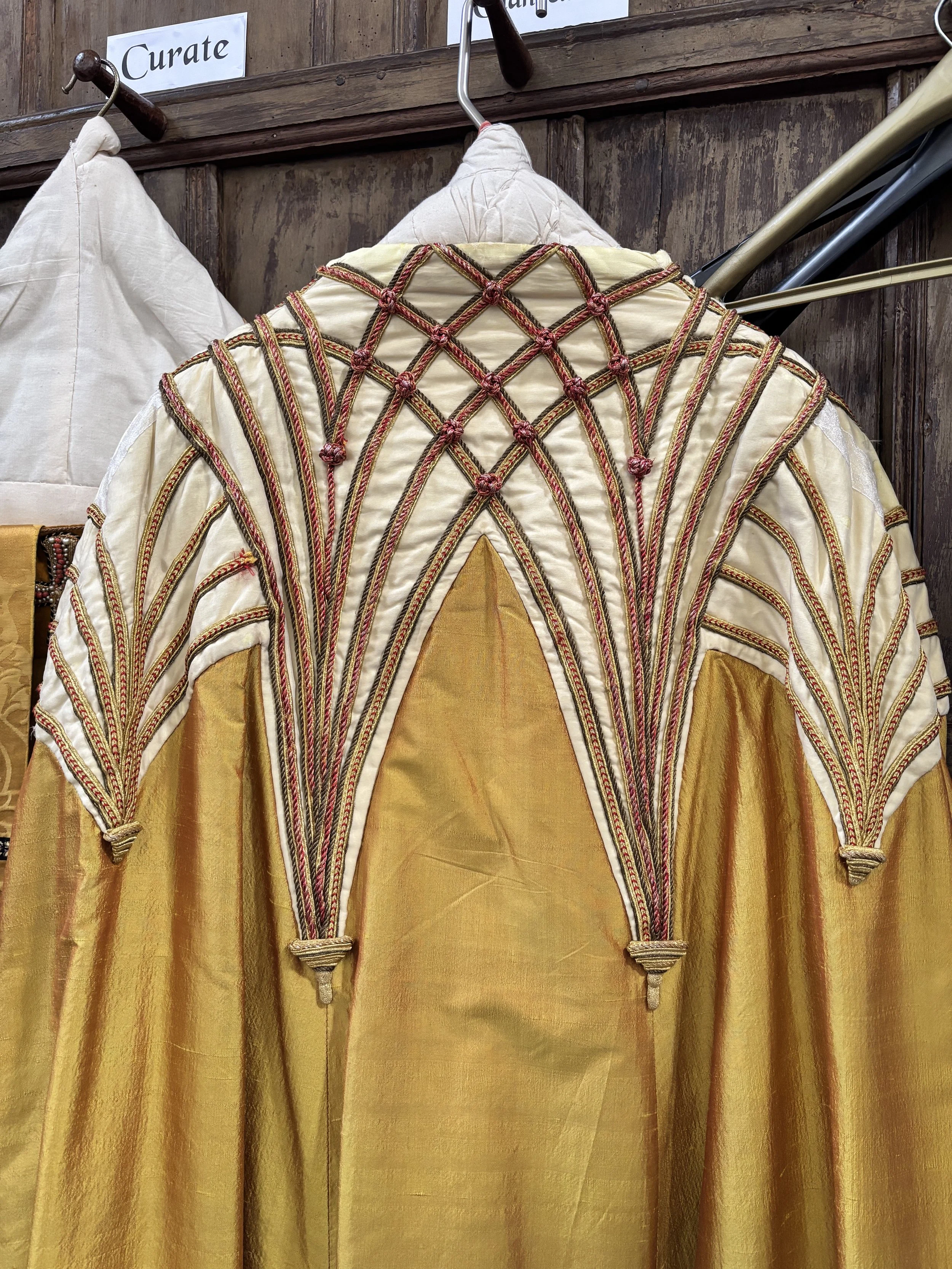
The cope designs incorporate the distinctive Gothic architecture of the Cathedral
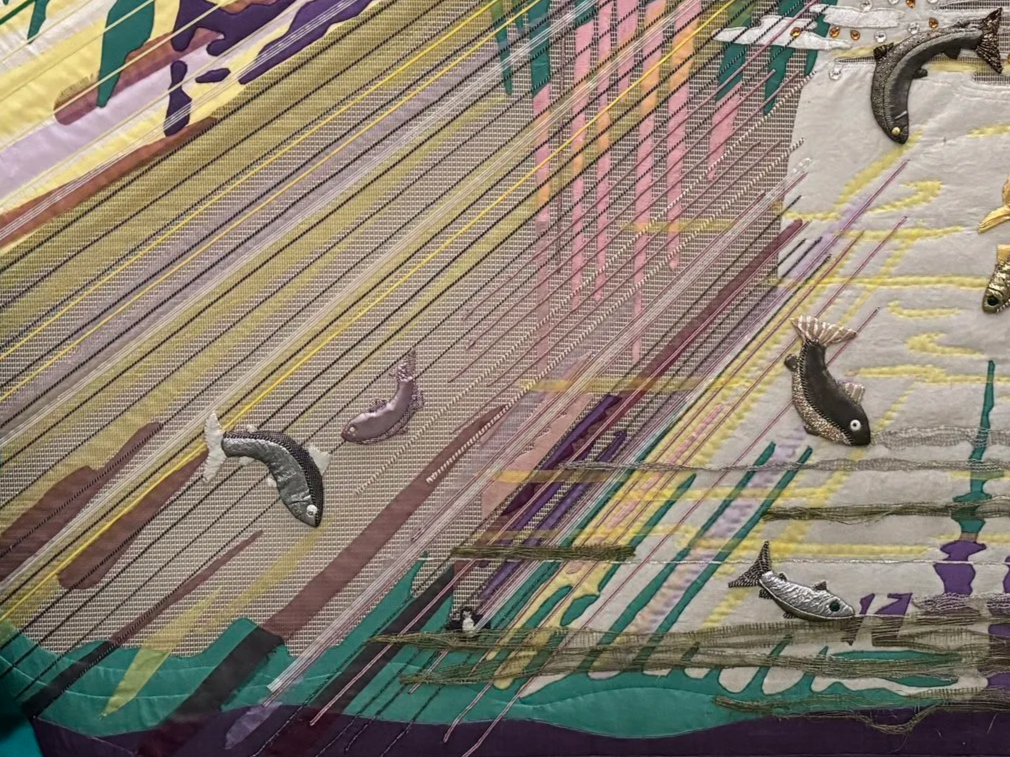
A little penguin among the fish in one of the Millennium Series frontals
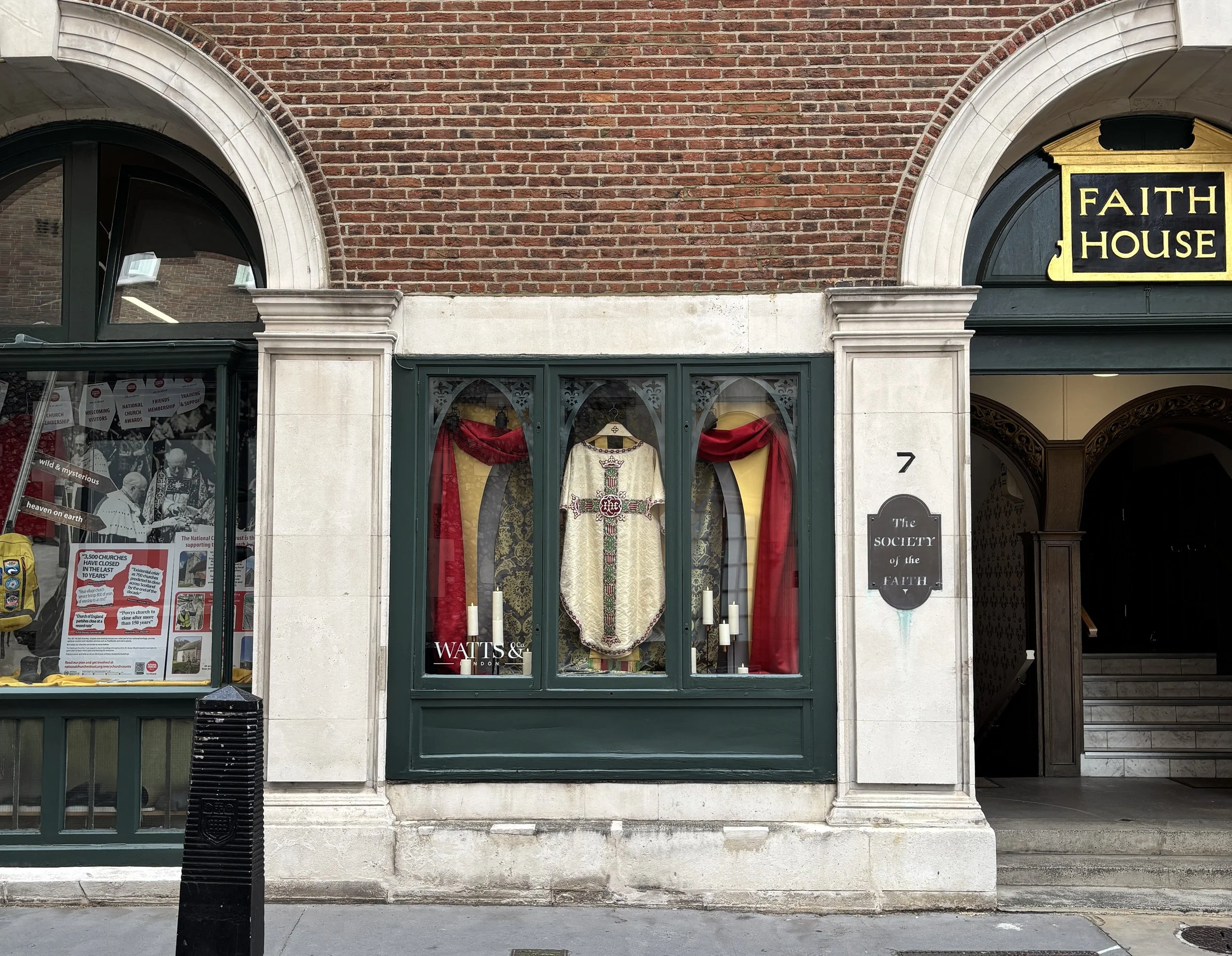
The front window of Watts and Co. London, bespoke vestment makers since 1874